
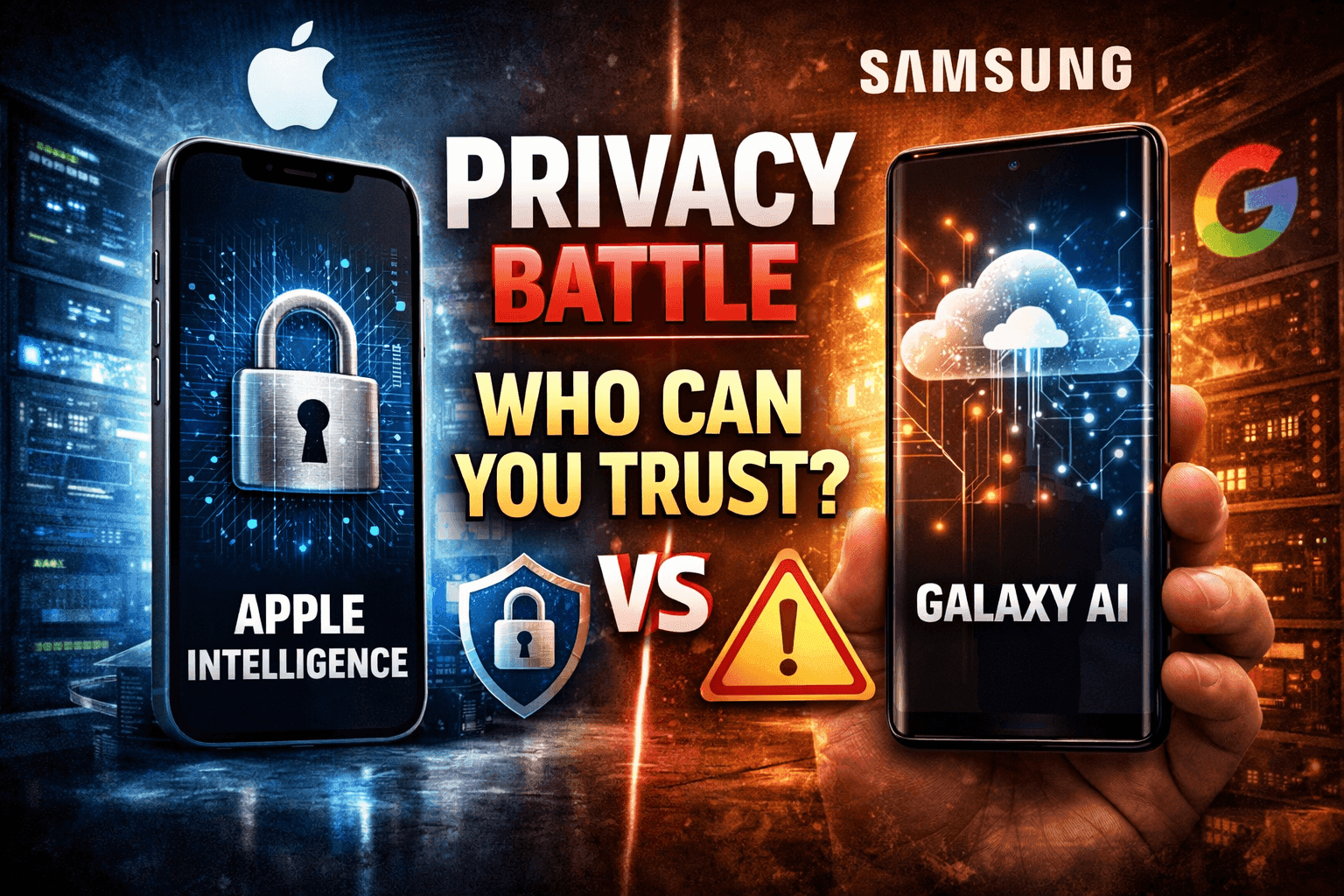
Apple Intelligence vs. Samsung Galaxy AI: Which Titan Truly Protects Your Privacy?
In 2026, the smartphone war has shifted. It’s no longer just about megapixels or processor speeds; it’s about Trust. As we integrate AI deeper into our lives—letting it read our emails, summarize our meetings, and edit our private photos—the big question remains: Where exactly is our data going?
Apple and Samsung have taken two fundamentally different paths to answer this question. For users in strict privacy-regulated regions like the European Union and the US, understanding these differences is vital.
Apple Intelligence: The "Fortress" Approach
Apple’s strategy is built on a "Privacy-First" foundation. Their goal is to ensure that your personal data never leaves your device unless absolutely necessary.
Key Pillar: On-Device Processing
By default, Apple Intelligence performs the majority of its tasks directly on the iPhone's silicon. Whether it's Siri understanding your personal context or your phone generating a "Genmoji," the data stays in your pocket.
Innovation: Private Cloud Compute (PCC)
For complex tasks that require more power, Apple introduced Private Cloud Compute.
- The Magic: Data is sent to specialized Apple Silicon servers in a stateless manner.
- The Security: Your data is never stored, and even Apple cannot access it.
- Verifiability: In a move to win over European regulators, Apple allows independent security researchers to audit the code running on these servers.
Samsung Galaxy AI: The "Hybrid & Flexible" Model
Samsung, powered by its partnership with Google, offers a more versatile but "Hybrid" approach. It balances local speed with the massive power of the cloud.
The Hybrid Logic
Samsung splits its AI tasks. Simple features like "Live Translate" happen on-device for speed. However, creative heavy-lifting—like Generative Edit or Circle to Search—often relies on Google’s Gemini models in the cloud.
User Control: The Privacy Dashboard
Unlike Apple’s "invisible" privacy, Samsung gives you the steering wheel. Through the Galaxy Intelligence settings, users can choose to:
- Disable all cloud-based AI processing.
- Keep data strictly on-device (at the cost of some advanced features).
- Monitor exactly which apps are requesting AI data through the Samsung Knox dashboard.
Privacy Comparison: At a Glance
| Feature | Apple Intelligence | Samsung Galaxy AI |
|---|---|---|
| Primary Processing | On-Device (Default) | Hybrid (Device + Cloud) |
| Cloud Security | Private Cloud Compute (Stateless) | Samsung Knox / Google Cloud |
| Third-Party Integration | Opt-in (e.g., ChatGPT) | Deep Integration (Google Gemini) |
| Transparency | Independent Audits available | User-controlled toggles |
| Data Usage | Not used for Training | Depends on User Settings |
The EU & US Regulatory Factor
In Europe, the GDPR and the Digital Markets Act (DMA) have made users skeptical of cloud-based tracking.
- Apple is positioning itself as the "Privacy Champion," though it has faced delays in the EU due to DMA compliance.
- Samsung benefits from being highly transparent about its "Hybrid" nature, allowing users to opt-out of cloud features to meet local privacy standards.
Which One Should You Trust?
Choose Apple Intelligence if...
You want "Invisible Privacy." If you don't want to dig into settings and prefer an ecosystem where the manufacturer literally cannot see your data, Apple’s hardware-software integration is the gold standard.
Choose Samsung Galaxy AI if...
You want "Granular Control." If you are a power user who wants the best AI tools (Google-powered) but wants the option to "lock down" the phone when handling sensitive work, Samsung offers the flexibility you need.
In the battle of Apple vs. Samsung, the winner isn't the one with the smartest AI, but the one that makes the user feel safest. As we move further into 2026, Privacy is the ultimate premium feature.
Read more

Amazon Acquires Globalstar for $11 Billion, Inherits Apple’s 20% Stake
Amazon finalizes an $11 billion acquisition of satellite operator Globalstar, taking over Apple’s 20% ownership. The deal fuels Amazon Leo, a new low‑latency broadband network, while preserving Apple’s emergency SOS services.
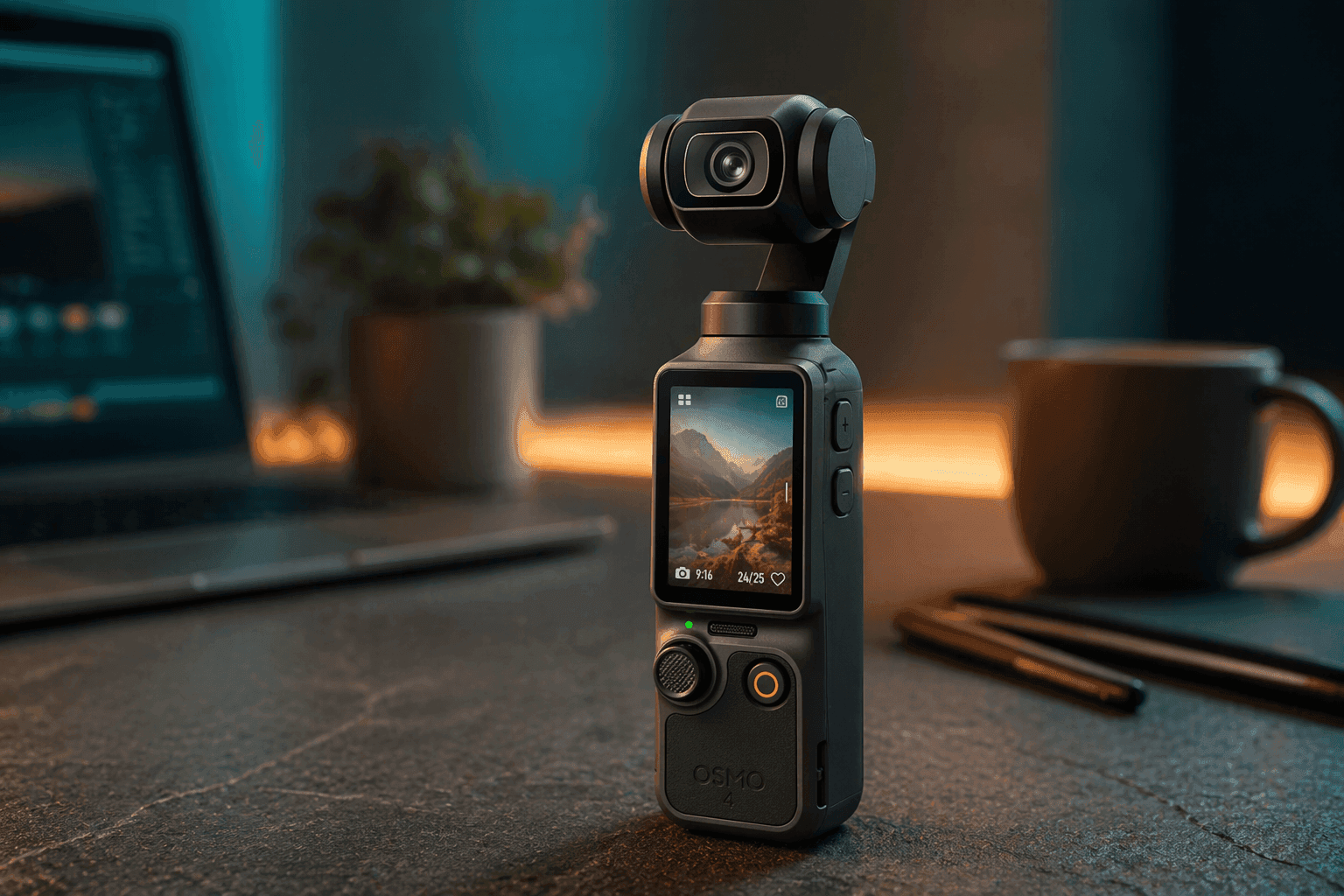
DJI Osmo Pocket 4 Review 2026 - The Best Gimbal Camera for Solo Creators
DJI Osmo Pocket 4 review: 4K 240fps, 107GB built‑in storage, 14 stops dynamic range, and Active Track 7.0. See if it beats Pocket 3 for solo creators.
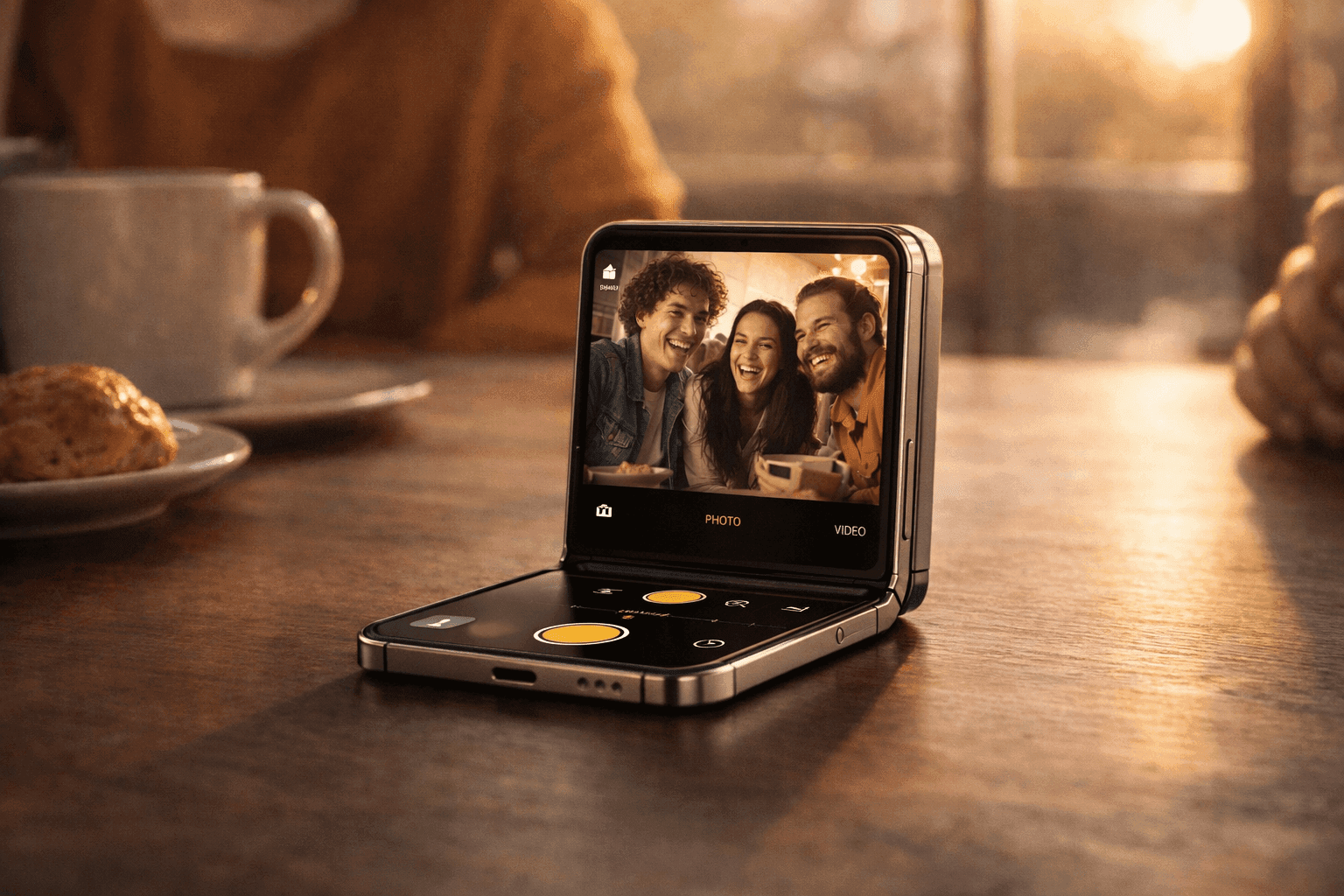
Apple Foldable iPhone Just Leaked: 5 Reasons It Will Change Everything
Apple's first foldable iPhone Flip is coming in 2026. Leaked design, display, price, and AI features. Should you wait or buy iPhone 17? Read now.