
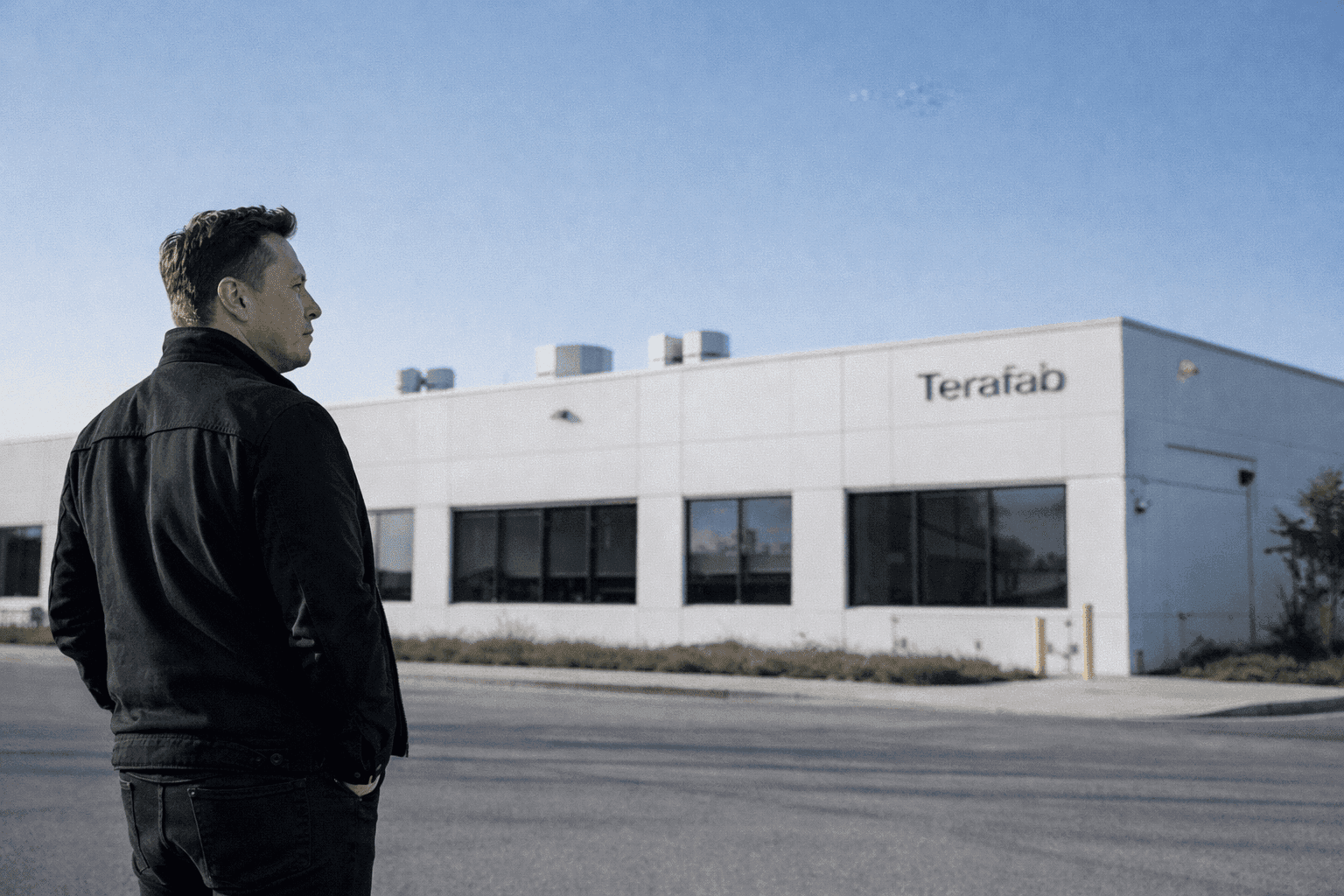
Elon Musk’s newly announced semiconductor project backed by Tesla, SpaceX, and xAI. With an estimated investment of $20–25 billion, Terafab aims to redefine how computing infrastructure is built, both on Earth and in space.
What Is Terafab?
Terafab is a next‑generation semiconductor manufacturing initiative designed to build ultra‑powerful chips at unprecedented scale. Unlike traditional chipmakers that focus on incremental improvements, Terafab prioritises speed, scale, and complete control over the production process.
The project’s goal is simple but massive: produce enough computing power to fuel the future of AI, robotics, and space‑based systems without relying on external suppliers such as TSMC or Samsung.
A Production Goal That Changes Everything
Terafab targets 1 terawatt (1 trillion watts) of computing power annually. To put that number in perspective, Musk has claimed that this single factory could exceed the total output of the global chip industry by 2030.
If achieved, this would not just beat competitors any more, it would fundamentally reshape the balance of power in the semiconductor world. However, industry analysts caution that such numbers are highly ambitious and depend on breakthroughs in manufacturing yield and power efficiency.
Vertical Integration - The Real Game Changer
Today’s chip industry is highly fragmented. One company designs the chip, another manufactures it, and a third handles packaging and testing. Terafab flips this model by bringing everything under one roof: design, lithography, memory fabrication, advanced packaging, and testing. It may sound impossible or like a fantasy, but it is going to become true.
This vertical integration offers several advantages. It enables faster innovation cycles, tighter performance optimisation, and reduced dependency on external suppliers. The strategy mirrors what Tesla did with electric vehicle manufacturing, controlling the full supply chain to accelerate progress and cut costs.
Two Types of Chips for Different Worlds
Terafab plans to produce two distinct families of chips.
Terrestrial chips are designed for Earth‑based systems. These include Tesla’s Full Self‑Driving computers, the Cybercab, Optimus humanoid robots, and general AI applications. The focus is on real‑time processing, AI acceleration, and energy efficiency.
Space‑grade chips, also called D3 chips, are built to survive extreme environments or high radiation, severe temperature swings, and long‑duration space missions. They will be used in satellites, spacecraft, and orbital infrastructure. These chips must be fault‑tolerant, durable, and highly energy‑efficient.
Space‑Based Computing
Perhaps the most futuristic part of the Terafab plan is its space component. Musk has stated that up to 80% of Terafab’s chips could be sent into space.
The idea is to create solar‑powered AI satellites and orbital data centres that benefit from virtually unlimited solar energy and reduced cooling limitations. This would form a distributed, space‑based AI computing network.
Location and Investment
The Terafab facility is planned for Austin, Texas, near Tesla’s existing Gigafactory. The estimated investment ranges from $20 billion to $25 billion, placing it in one of the fastest‑growing tech ecosystems in the United States. The location gives Terafab access to engineering talent, supply chains, and logistical support.
Why This Matters for Developers and the Industry
Terafab signals three important shifts. First, AI is becoming infrastructure‑level. It is no longer just software or cloud computing which is deeply tied to custom hardware. Developers building AI applications will increasingly find that silicon design determines what is possible.
Second, vertical integration is likely to spread. More companies will design and manufacture their own chips, controlling the full stack to optimise performance end‑to‑end.
Third, space is emerging as a real computing platform. Orbital data centres and satellite‑based AI are no longer pure speculation. For developers, future applications may depend on massive, distributed compute systems operating above Earth’s atmosphere.
Can This Actually Work?
Terafab is one of the most ambitious technology projects ever proposed. The challenges are substantial. Advanced chip manufacturing at 2nm and beyond is extremely difficult. Competing with TSMC, which has decades of experience and a deep moat of patents, is not easy. The project also requires precision, enormous capital, and a highly skilled workforce.
The project could either redefine global computing or become one of the biggest tech risks of the decade. Either way, it is a signal that hardware is once again taking centre stage in the AI revolution.
Read more
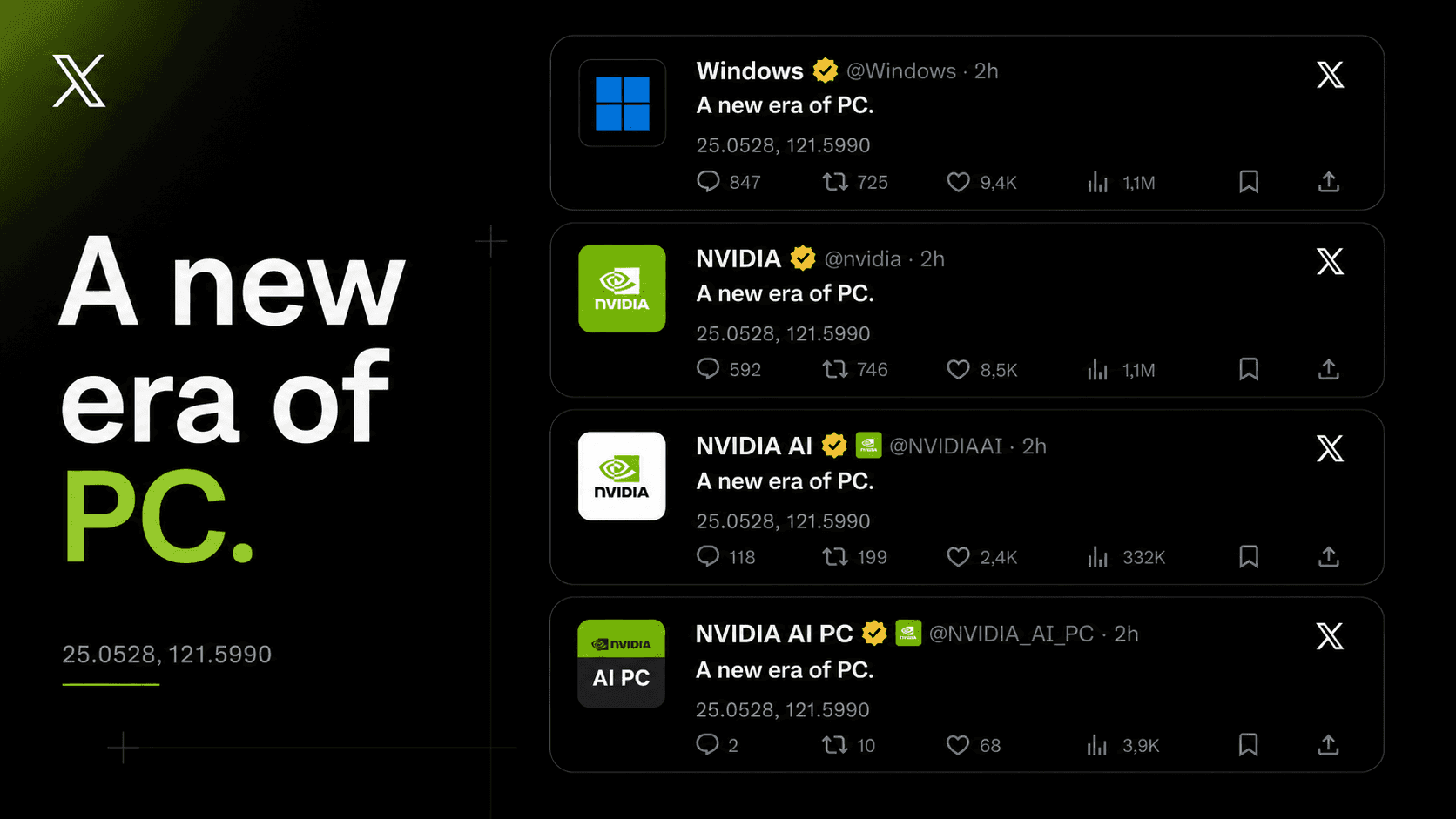
A New Era of PC! Why Microsoft and NVIDIA Are Posting the Same Mysterious Message
Microsoft and NVIDIA have sparked speculation with their mysterious “A New Era of PC” posts featuring Taipei coordinates. Explore what this could mean for AI-powered Windows PCs, next-generation NVIDIA hardware, and the future of personal computing.

AI Developments in the Last 48 Hours: Agents, LLMs, and What You Missed
OpenAI, Google, Microsoft, and xAI all dropped major agent updates. Catch up on autonomous systems, coding models, and what’s next in 5 minutes.

Is AI a Threat? The Big Tech Changes of the Last 48 Hours
The tech world never pauses. What has happened in just the last 48 hours could change the direction of the future. Let’s not even start with Claude AI again.