
The internet most people use every day—search engines, social media, online shopping—is only a small portion of the digital world. Beneath it lies a hidden layer often referred to as the dark web, where anonymity enables both privacy advocates and cybercriminal networks to operate.
While the dark web has legitimate uses, it has also become the foundation of a multi-billion-dollar underground economy centered around stolen data.
From hacked passwords to full digital identities, personal information is bought and sold with alarming efficiency.
“In today’s digital underground, personal data is treated like currency.”
Understanding how this ecosystem works is essential for anyone who values their privacy, financial security, and digital identity.
What Exactly Is the Dark Web?
The dark web refers to websites that cannot be accessed through traditional browsers like Chrome or Safari. Instead, they require specialized software such as Tor (The Onion Router) to access anonymous networks.
These networks conceal the identity and location of both users and website operators.
Layers of the Internet
| Layer | Description |
|---|---|
| Surface Web | Public websites indexed by search engines |
| Deep Web | Private databases, academic portals, internal company systems |
| Dark Web | Anonymous networks requiring special software |
While the deep web contains legitimate private information, the dark web is where underground marketplaces often operate.
The Underground Marketplace for Stolen Data
On the dark web, cybercriminals operate sophisticated marketplaces that resemble legitimate e-commerce platforms.
These sites often feature:
- Vendor profiles
- Customer reviews
- Escrow payment systems
- Cryptocurrency transactions
- Product listings
In many cases, the platforms function almost identically to online marketplaces like eBay—except the products being sold are illegally obtained digital assets.
Common Types of Stolen Data Sold
| Data Type | Typical Use |
|---|---|
| Email & password combinations | Account takeover |
| Credit card details | Fraudulent purchases |
| Bank account credentials | Financial theft |
| Full identity profiles (“Fullz”) | Identity fraud |
| Corporate credentials | Corporate espionage |
| Medical records | Insurance fraud |
A “Fullz” package—which may include name, address, social security number, phone number, and financial details—can sell for as little as $30 to $100 depending on the data’s quality.
How Hackers Obtain Stolen Data
The dark web economy relies on a constant supply of newly stolen information.
Cybercriminals gather this data through various attack methods.
1. Data Breaches
Large companies sometimes experience security failures that expose millions of user records.
Attackers exploit vulnerabilities in:
- Cloud infrastructure
- Databases
- Authentication systems
Once stolen, the data is packaged and sold in bulk.
2. Phishing Attacks
Phishing remains one of the most effective cybercrime techniques.
Attackers send convincing emails or messages designed to trick users into entering their credentials on fake websites.
Common phishing targets include:
- Banking services
- Email providers
- Cloud storage platforms
- Social media accounts
3. Malware and Spyware
Malicious software can secretly monitor victims' devices.
Some malware strains are specifically designed to steal:
- Saved browser passwords
- Cryptocurrency wallets
- Autofill information
- System credentials
This data is then uploaded directly to criminal marketplaces.
The Business Model of Cybercrime
The dark web economy has evolved into a structured supply chain.
Different actors specialize in specific roles.
Cybercrime Supply Chain
| Role | Responsibility |
|---|---|
| Hackers | Steal data through attacks |
| Data brokers | Package and sell stolen data |
| Fraudsters | Use stolen information to commit fraud |
| Money launderers | Convert stolen money into usable funds |
This specialization allows cybercrime groups to operate with surprising efficiency.
In many cases, attackers never directly use the data they steal—they simply sell it to others who specialize in exploitation.
Cryptocurrency: The Fuel of the Dark Web
Payments on dark web marketplaces are typically conducted using cryptocurrencies.
Digital currencies provide several advantages to criminals:
- Pseudonymous transactions
- Global accessibility
- Limited banking oversight
Commonly used cryptocurrencies include:
- Bitcoin
- Monero
- Ethereum
Among these, Monero has become particularly popular because it offers enhanced privacy features.
Real-World Impact of the Dark Web Economy
While the dark web might seem distant from everyday life, its impact is very real.
Stolen data can lead to:
- Identity theft
- Financial fraud
- Corporate data leaks
- Account hijacking
- Reputation damage
According to cybersecurity researchers, billions of personal records are exposed every year, feeding the underground data economy.
Even individuals who practice good security habits may still be affected if a company they use experiences a breach.
How to Protect Yourself
Although the dark web economy is vast, individuals can significantly reduce their risk by adopting good cybersecurity habits.
Essential Security Practices
- Use Unique Passwords : Never reuse passwords across multiple accounts.
- Enable Multi-Factor Authentication (MFA) : This adds an additional verification step beyond passwords.
- Monitor Data Breaches : Security tools and breach notification services can alert you if your data appears in leaked databases.
- Avoid Suspicious Links : Phishing links remain one of the most common attack vectors.
- Use a Password Manager : Password managers generate and store strong, unique passwords securely.
The Future of the Dark Web Economy
Cybercrime continues to evolve alongside technological innovation.
Experts believe the next wave of cybercrime may involve:
- AI-powered phishing campaigns
- Automated credential harvesting
- Deepfake social engineering attacks
- Targeted attacks on digital identities
At the same time, cybersecurity defenses are also advancing with AI-based threat detection, stronger encryption standards, and passwordless authentication technologies.
The ongoing battle between attackers and defenders will continue to shape the future of digital security.
Read more
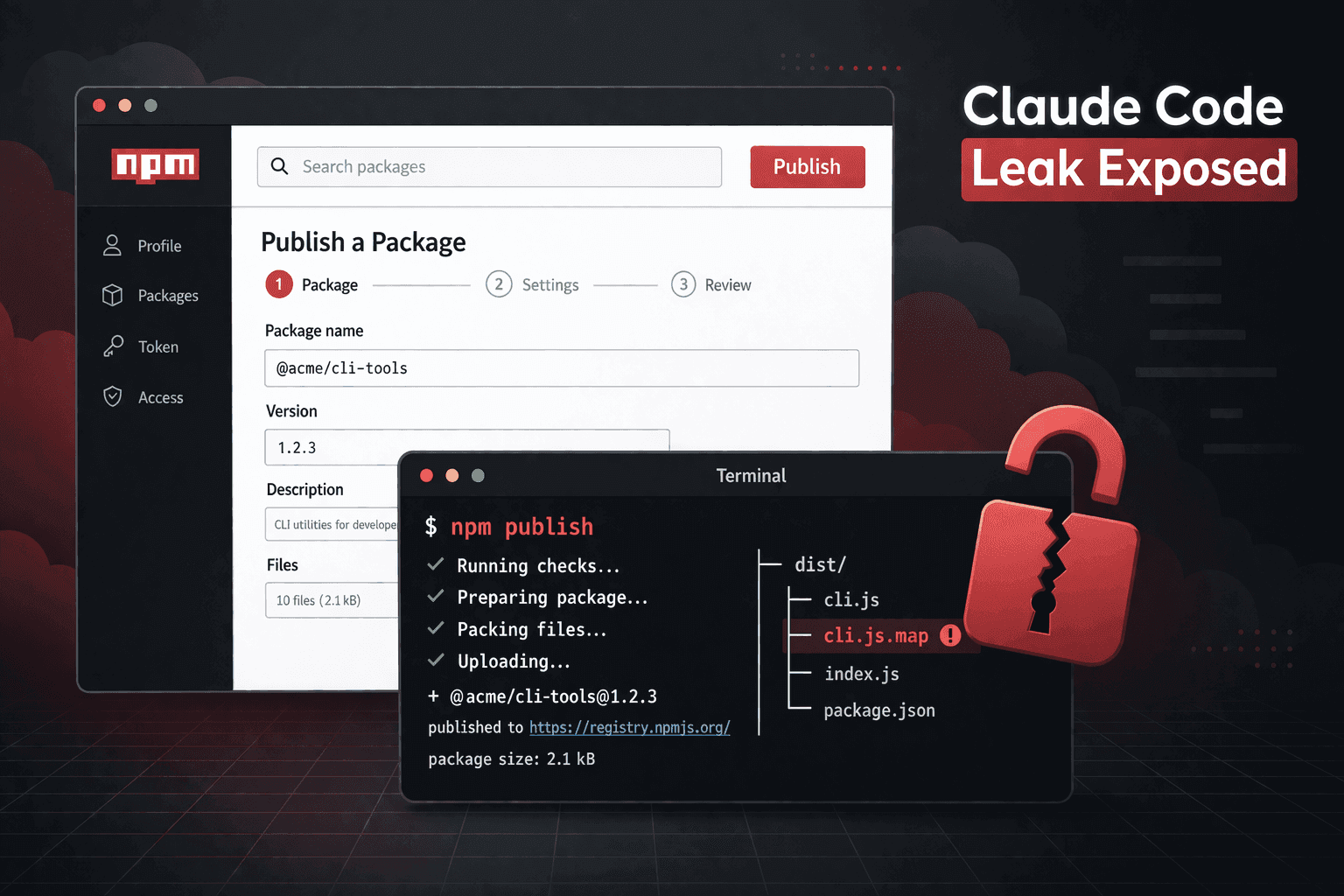
Claude Code Source Code Leak: What Really Happened and Why It Matters
Claude Code’s source code leaked on March 31, 2026 due to a simple npm config error. Learn what happened, how Anthropic responded, and what it means for developers.
The Axios Security Scare: What Developers Need to Know
Learn the truth behind the 2026 Axios security incident: what happened, how to check if you're affected, and the simple steps to stay safe.
Passkeys, AI Scams, and Data Leaks: The New Cybersecurity Reality in 2026
Cybersecurity threats are evolving rapidly in 2026. From AI-powered scams to the rise of passkeys replacing passwords, here’s how individuals and businesses can protect their data, privacy, and digital identity in today’s increasingly hostile online world.